
The Girl in the Window Puzzle Glossary
The vocabulary Dark Dome uses across the Hidden Town series, explained in plain terms.
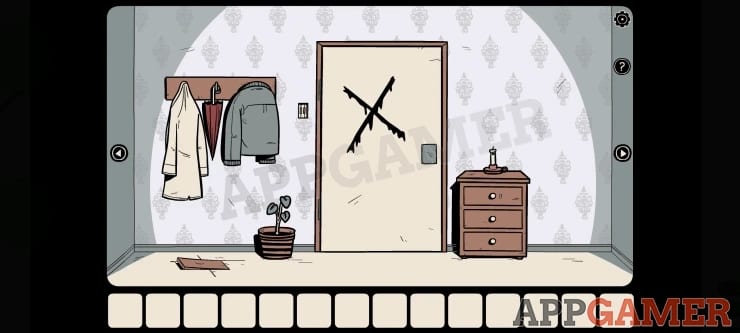
Dark Dome escape rooms have their own vocabulary. This page collects the terms the studio uses in its own UI, store descriptions, and hint systems. If a walkthrough uses a word you do not recognize, start here.
For walkthroughs, start with Getting Started. For puzzle solutions, go to Codes.
Hotspot
A clickable area on the game screen. Dark Dome games are image-based, not 3D — everything you can interact with is painted into the scene. Hotspots vary in size; some are generous (a whole drawer), some are punishing (a single tile on a dial). The controls page has mouse-specific tips for finding small hotspots on Steam.
Combine / Inventory combine
Joining two items from your inventory to make a new item. The Girl in the Window uses combine throughout: handle plus glass shard makes a knife; torn paper plus notebook page repairs the symbol order; the umbrella pulls a cable, and the lever comes from the vampire safe. Combines are permanent once made. The inventory does not stack or recombine further — one item in, one item out.
Randomize / Randomized puzzle
A puzzle where the correct answer changes each playthrough. The Girl in the Window randomizes the plant box, wallpaper grid, symbol cupboard, window-padlock glyphs, and vampire offerings. The METHOD never changes — the order you read from the notebook, pinboard, or portrait is always the same process. Only the sequence shuffles. See randomized puzzles for why copied video codes fail.
Notebook
The in-game journal that tracks your progress and clues. In The Girl in the Window it is a gray book on the bookshelf. Pages inside it show sketches of locks and item arrangements. The puzzle notebook tool maps each page to its corresponding lock.
Chain / Item chain
A sequence of inventory pickups and combines that must happen in order. Missing a step in a chain means a later lock cannot be opened. The Girl in the Window has a roughly linear chain running from the front door to the final lever. The tools page lists the full chain.
Offerings / Vampire offerings
The four items presented to the vampire portrait in order to reveal the safe combination. The order comes from newspaper clippings on a pinboard, not from the notebook. Items are garlic, wine-filled goblet, wooden cross, and mirror — but the sequence is unique to your pinboard layout. See vampire safe.
Clippings / Pinboard
Newspaper snippets on a wall that hold the ordering clue for the vampire safe. Each clipping hides a symbol underneath. Lift them left-to-right, top-to-bottom. That order does shuffle between saves; copy your board, not a video.
Padlock (window padlock)
A lock on the lower drawer under the window. Order comes from notebook squares matched to the curtain-light projection on the TV wall, not from the wallpaper grid. The process: glove, outdoor lamp, close the curtain, indoor lights off, read the projected symbols. Dedicated page: window padlock. This is a pipeline, not one action. Steam players who skip the lights-off step never see the projection.
Drawer lock
Any locked drawer that requires a key or a code. Keys in The Girl in the Window have distinct heads: square, round, oval, hex. A wrong key will not fit. The getting started guide names each key by its shape.
Slider puzzle
A tile-based puzzle where you rearrange pieces so that lines of electricity connect. In The Girl in the Window, the glove protects your hand while you touch the box. The goal is to complete a circuit — the visual is live wires, the mechanic is a classic slider.
Hint system
Dark Dome’s optional paid hint system on mobile. Hints cost real money on the free Android build. Steam has no hint system. The wiki is the free alternative: it explains methods rather than giving a digit to type. See the tools page for a method-focused approach.
Premium / Secret scene
A paid upgrade on Android that removes ads, enables free hints, and unlocks a post-credits scene. On Steam the game is a one-time purchase. The secret scene is story content after the lever; it is not a new puzzle chapter.
Hidden Town
The shared universe Dark Dome Studios uses across its catalogue. Each game is a standalone escape room. Stories cross-reference but the puzzles do not carry over. Characters from The Girl in the Window (Dan, Mia) appear in later titles. The Hidden Town hub lists every chapter with Steam IDs where available.
HUD
Heads-up display — the in-game interface. Dark Dome games have minimal HUDs. You see inventory at the bottom of the screen and nothing else until you open the notebook. There are no health bars, maps, or timers.
Walkthrough
A step-by-step guide through the entire game. This wiki’s walkthrough is written in verb form (grab, combine, open) rather than digit form (5364). It will not hand you a code; it will show you where the code lives in your specific room.
Spoiler
Content that removes discovery from the player. The wiki marks ending and twist pages as spoiler territory. The ending page is the canonical spoiler warning. A walkthrough page that describes the final scene is also a spoiler. Read at your own risk.
Frequently Asked Questions
Quick answers to the most common questions.
What is the hardest puzzle term to understand?
Randomize confuses most players. The method stays the same; only the order shuffles. Read randomized puzzles before you copy a code from a video.
Does the game use the word chain anywhere?
Dark Dome does not label chains in-game. The wiki uses chain to describe ordered inventory pickups. The tools page is the chain in practice.
Is there a hint system on Steam?
No. Dark Dome has no official hint system on the Steam build. The wiki is the free alternative: methods over digits.
What does Premium include?
On Android: no ads, free hints, and a secret post-credits scene. On Steam: a one-time purchase with no additional IAP. See premium.